
A thing about reading submissions is that sometimes there are stories that could have been made for me in a lab. Aaron read this one first and sent it my way for thoughts, and it took all of two lines to fall in love with Nick’s writing here. There are so many elements I adore: the chaos of healthcare shifts, messy family dynamics, and some truly lovely little phrases that stopped me while reading. You know that feeling, when you come across words arranged in a way you wouldn’t have thought to do but fit so nicely? I love when writing catches me off guard, and there are plenty of those moments in this story.
On top of all that, we have a story that explores the many different ways it can be tough and weird to be a person. Our main character, Mags, is such a perfect lens for the people around her as they make mistakes, work on healing, do terrible things, do beautiful things. Everyone is flawed and funny and achingly human. I hope you get wrapped up in this story as fast as I did.
—Jessica Dawn
Assistant Editor, Short Story, Long
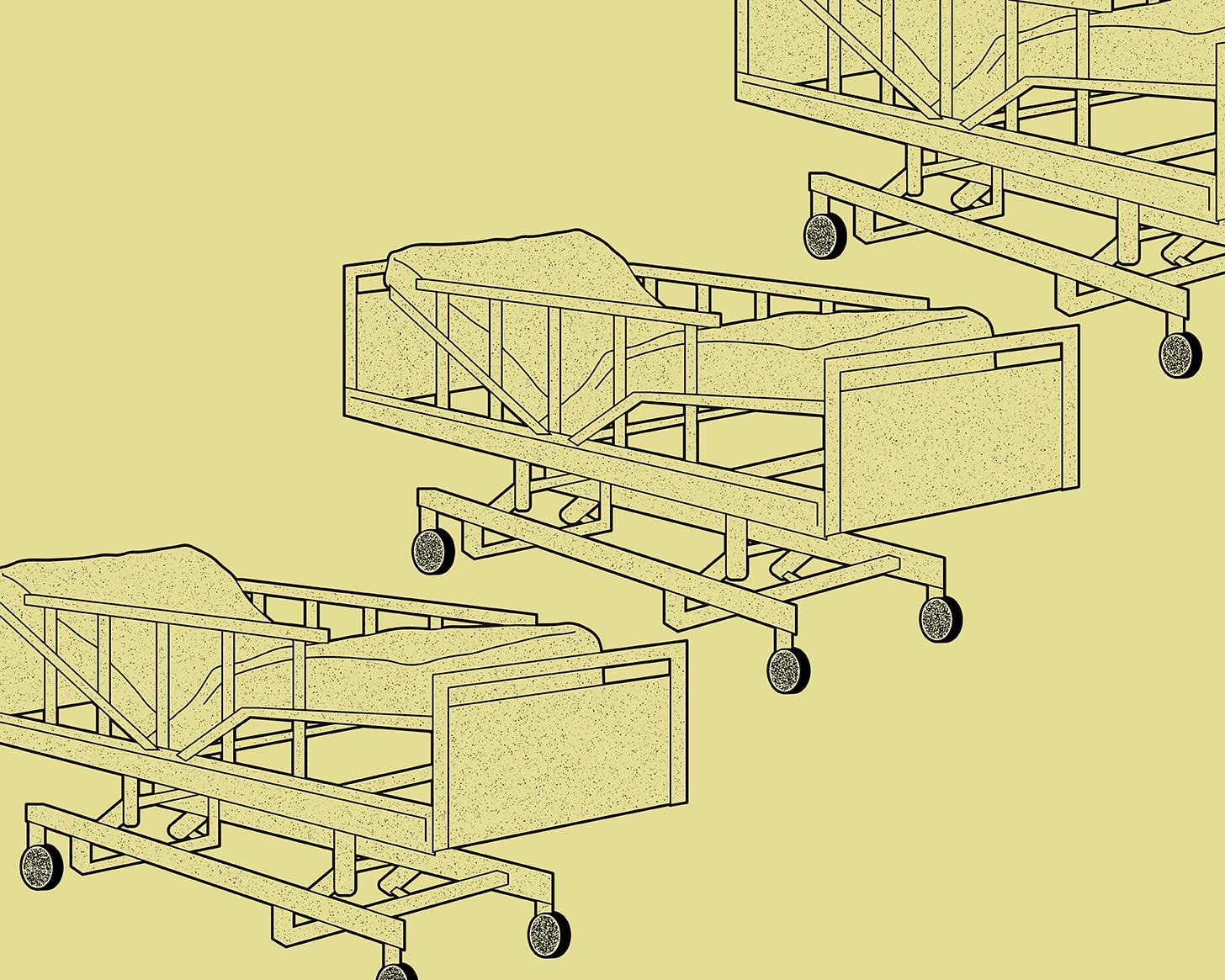
“Believer”
I’ve been working twelves since I finished clinicals and was hired full time, but my shift at MedMark’s dragged on over fifteen hours when the snakebite victims come in. They’re pastors, preachers, and other backwoods clergy and there are six of them. They slump into the waiting room or clatter from the ambulance bay on stretchers. A specifically robust and bejowled holy man with a cowboy hat he won’t take off walks halfway across the parking lot on his own recognizance before he collapses into a puddle of rainbow oil. He still clutches the snake who bit him, a vice so tight that the Diamondback is dead.
I bring it up to Grade, the intake nurse who has a habit of talking shit when he should be working. There are rumors he swipes supplies—a syringe off a passing tray, a pill from a patients’ script—but he’s never been caught. “This can’t be a coincidence,” I say. “Like it’s gotta be some kind of sign.”
“If you believe in shit like that,” says Grade.
“Shit like what?”
“Signs,” says Grade as he stuffs the last donut into his mouth.
“No,” I say, “No, no, no.” I mean, sure, I was raised evangelical, a believer, but I’m not one to premonition apocalypse over a snakebite. “But isn’t it strange?” I say. “I mean, it’s gotta be something.”
“Strange?” says Grade, “Strange that a bunch of hillbilly nutjobs put belief over common sense?”
I brush him off. There’s nothing Grade loves more than to gaslight. No surprise he’s too bored to show interest in the odd. I introduce antivenom to the cowboy hat dude’s drip and save his life. It’s not like I’m calling this a miracle because the real miracle is not being bit. The news is filled with viral loads and social distancing, layoffs and deaths. And with the churches preaching anti-vax, anti-doctor rhetoric while their congregations die off, is it far-fetched at all to believe God has finally turned his back?
***
I’m scheduled for inpatient care the next day—different wing, double-digit floor—and my first stop is Louise, a feisty seventy-year-old with a rare form of leukemia. Even waxy and wrinkled without her hair she’s beautiful. Her smile, all teeth and eyes, literally brightens my day. Like, for instance, I make it all the way until lunch, when I step out on the patio and see the sky is, in fact, overcast. Louise’s cancer has a discouragingly low survival rate, but that never keeps her down. No, Louise would use her last ounce of gusto to fill this sanitized room with sunshine.
My mission on this visit is to get her to take her pain meds. She sleeps sporadically, a few minutes at a time, and several attendants have mentioned that she moans overnight, but she refuses the opioids we offer. Her face twitches with what could only be paroxysms of hurt.
“Look,” I tell her, “Don’t you want to sleep through the night? Wouldn’t it be nice to have, you know, a couple of hours of comfort?”
Louise shakes her head. “No drugs.”
Her voice is hoarse. She vomits frequently which has fried her throat and to top it off, she chokes on fluids.
“I know you’re nervous about addiction,” I say, “Which is why we’ll be extra careful…”
Louise stares catatonic in response, but her left eye twitches, twitches again.
“Don’t you trust us?” I ask. “Don’t you trust me?”
“It’s not about trust,” she says. “Well, it’s not about you.”
“Jakey?” I ask. Jakey, her drug addict son, spends several hours a day watching over her. As far as I can tell, he’s clean for the time being, but he doesn’t appear to have any kind of job, and his home address matches his mother’s and he keeps strange hours, sometimes coming to sit bedside as soon as the sun rises and other times, at the tail end of visitation. He’s unpredictable, usually kind, but mostly quiet with circles under his eyes. He’s difficult for me to trust.
“Yes, Jakey,” Louise goes on, “Can you even imagine?”
I nod my head. I think of my brother, only 16 months off opioids himself.
“He was gone,” she says. “Like, his soul was gone.” Louise hacks and then goes on to describe her son’s shift from straight A’s to dropout, from kind and smiling to thieving and always depressed and usually sick. “So, no thank you.”
“I understand.” I grip her hand which is such a fragile piece of paper I worry I’ll crumple it.
“I want to spend my last days as me,” says Louise. “And I don’t want to give him the excuse.”
“It’s just,” I say. I want to tell her about quality of life, about making the best of a bad situation. I want to tell her about my brother, Abe, who shot pills until he cleaned up at rehab and moved in with me. But she knows this. I’ve already overshared in hopes that she’d trust me deeper. She knows it’s a huge transition from the drug world to the mechanics of the working class Midwest, and I’m definitely sympathetic to that, and Jakey’s about six months into his new life like Abe, but. There’s still, there will always be this but.
***
I get the next day off. I haven’t had even 24 hours to myself in a month and my sleep schedule’s junk, but once I’m home, I can’t sit still. My feet are sore, so I prop them on the haggard ottoman. I go online and order three-hundred-dollar cushions of shoes. I find other things to order, like a new ottoman. And why not a fresh pack of multivitamins, a case of health-conscious energy drinks, a cute mushroom-shaped air freshener for my car which, since Abe’s been borrowing it, smells like a lingering fart.
Abe ratchets away in the garage while I blow half my paycheck. He gets by, financially, by suping up old beaters for the street-racing community of Westinghouse, Ohio and splitting bills on my two-bedroom. I get by, financially, by earning massive overtime during a global pandemic. The zeros on my paychecks smile at me and I buy buy buy to keep that money from taunting.
Too tired to cook, I order pizza. I shout into the garage, into a spray of sparks, “I got pizza,” and Abe shouts back, “No olives?”
“Yes olives,” I say. “Always olives.”
Abe rises up from the car and flips up his welding hood to stick a couple gloved fingers in his mouth and fake vomit. He flips the hood back down and disappears into a spark storm behind the car.
“More for me!” I shout over the crackle of the MIG.
I eat my pizza alone on the couch and pass out to compilations from The Office on YouTube.
***
I’m not acting weird. I’m not on anything. Not delirious or malnourished or senile, but that dickhole, Grade, won’t stop eyeing me like a liability. The first thing he says when I check in at the desk is, “Well look who survived the end times!” There’s a pitch in his voice like I’m a toddler in need of reprimand.
I tell him to fuck off.
“You still looking for signs?” Grade says. “Has the Lord spoken to you?”
“Fuck you, Grade,” I say. “It’s just weird. It’s just.” I pick up a clipboard to move on with my day but Grade leans in conspiratorially. “Coincidence,” he says. “That’s all.”
I’m back on triage, assessing symptoms, ascertaining care. Just a couple months ago, MedMark was so full we treated people on folding chairs in the waiting room while we prayed for beds to open up. I mean, there were patients moaning and cussing us out on stretchers lined up along the length of the hall and ambulances were being turned away. Every day the same symptoms: that cough, lightheadedness, dehydration, fever, lost sense of taste and smell. We gloved and masked and sanitized, sang songs while we washed our hands. Grade was the only one in the building who wore his mask loose around the nose, who strutted about like a cock through a cloud of sick and he never caught the virus. At least never showed signs. But now there are beds available, whole rooms even, and other hospital staff sometimes forget to tighten their N95s, as if all the science is worthless, as if they believe that comfort is a higher priority than disease.
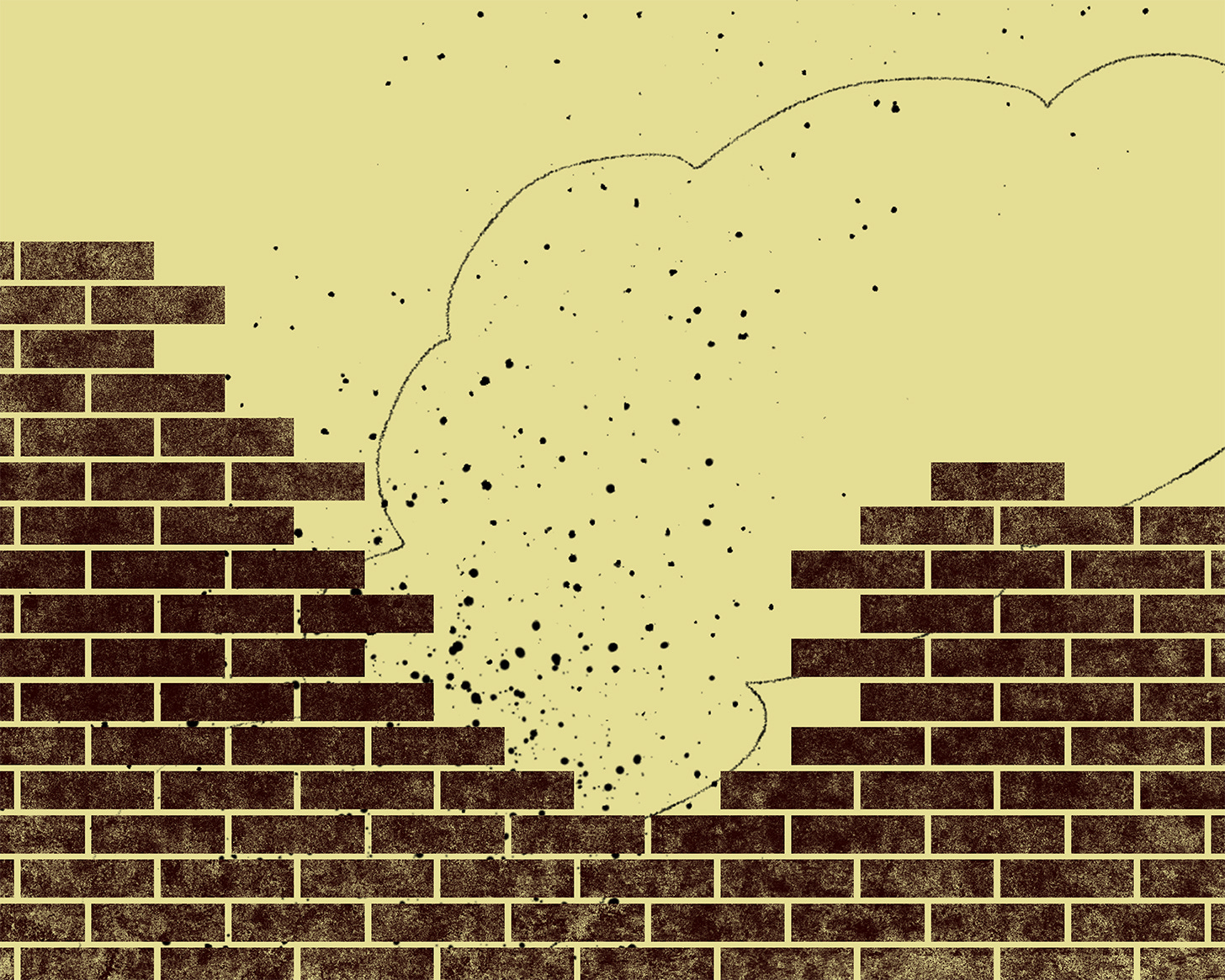
My first patient of the day wears a t-shirt that says, “All of you fascists bound to lose.” He’s been pulled from beneath the rubble of the fallen municipal building. This is how I get my news, not from the talking heads on TV, but from those who suffer the fallout first hand.
I ask him if he’s a Guthrie fan and he looks at me blank-faced and I try not to roll my eyes at yet another poseur. How can you believe in something if you don’t know its origins? How can you trust what you don’t understand? These are the questions of religions, organizations, and protests all over the world.
I’m told there’s been another march against police brutality. Others have already been admitted with brick dust blanketing their BLM shirts, and between their conversations and some passing remarks from EMTs, I puzzle out the facts: that the protestors circled the mayor’s offices shouting into bullhorns and carrying flags; that, out of nowhere, the building began to tumble. I picture the drawings in one of my Grandma’s board books where the Israelites with their staffs and beards and crimson robes, their shofars blasting and standards raised, as they round the corner of Jericho turned to rubble in the name of the Lord. But in this case, the mayor of Westinghouse was fine. No one of importance was inside the building on a Saturday, but the lilt of the five story construction had tipped it on top of the protestors, catching many in the ruin. Foul play was likely. Someone had blood on their hands.
“Adam,” I say my patient’s name. “Can I call you Adam?”
Adam blinks in brick-dust whiteface. He cracks his lips: “Yes.”
“Do you know where you are?”
A tear wets a path on his cheek. He nods and the tear’s stream oxbows. “Yes,” he says. “I know.”
I puzzle my face beneath my mask. I can hide my confusion there, keep it personal while I pinch his wrist and count against my ticking watch. I Velcro the cuff on his bicep and run the BP machine. I take his temperature. I ask about family history, preexisting conditions. It’s his legs that are damaged, mostly. This is obvious because he can’t move them and they’re bent at weird angles. His bones are crushed, probably, but some combination of shock and morphine is keeping calm.
“I saw a bright flash of light,” Adam says. The same cliché as just about anyone who comes close to death. Bright lights, a hand beckoning you out of the darkness, a new lease on life. Not a God downing a building on the faithful, the righteous, but a step out into the holy.
“Ok,” I say. “Sounds like you had a near death experience…” I feel his arm for breaks.
“Not that,” he says, “I saw it before the collapse.”
“Hmmm…” I say. “Now, how much pain are you feeling on a scale of one to ten…”
He interrupts me: “That’s why I didn’t move. I was stunned… And then the building… It
falls… But the light. That was before…”
“Ok,” I say. “I need you to focus.”
“No. You don’t understand. But it’s like… It’s like.”
“I know,” I say, “It’s like a miracle or something. It’s like that Bible story? Like Jericho?” I surprise myself with this outburst but I’m trying to stay logical. Miracles aren’t real. Grade’s voice pricks at the back of my mind: You see anymore signs lately?
“Ummm…” says Adam.
“You know what I’m talking about, right?” I say. I begin to retell the story from the gospel, a tale so ingrained in my upbringing that it’s laddered in my DNA. But as I explain how the Israelites marched around the city of Jericho with Shofars and how God cast a blinding light from the heavens and crumbled the walls, Adam shakes his head. He says, “No, no, no.” He laughs. He winces. “You misunderstand.”
I say, “It’s hard not to jump to conclusions.”
“Migraines,” he says. “That’s the word I was looking for. You asked if there were preexisting conditions. I have migraines. That’s why I saw the flash of light. But it’s gone now. The rest of me hurts but not my eyes.”
I laugh. I’m an idiot.
“Will I be okay?” says Adam.
“I’m sure,” I say. My head spins. “We’ll get you fixed up in no time.”
I schedule Adam for x-rays and make a note about his migraines and I hustle away from the awkward air. I want him to forget me and my dumb faith-based blunders because Grade is right, it’s all just coincidence, and I don’t know why I’m trying to glean otherworldly meaning.
***
Over lunch, which I take, as usual, at the rooftop cafe outside the cancer ward, I stare into my chicken salad wrap and consider the writers of religious texts, the miracles that, until they were linked together and bound within a book, could’ve been similarly shrugged off. Water into wine doesn’t mean there’s a God until you pair it with Dead Sea parting, the raising of the dead, and endless bread and fish. Toast with the virgin’s face fades into folklore if it’s not replicated over and over again. There’s a rule of threes for miracles, I decide. Kind of like how my brother and his shady friends push grandma’s Honda into the garage and, just a few hours later, peel it out, roaring—looks like a rabbit from a hat trick, but it’s really just spark plugs, paint, and janky welds. My stomach growls, so I take a bite, the only call and response that makes sense anymore.
After I scarf down my lunch, I sanitize, remask, and gown up to visit Louise. She’s the same, still wincing with pain. She greets me with an, “Oh, hello!” that ends in “oh! oh! oh!” Little flinches of discomfort.
I open my mouth to respond, to tell Louise that there’s a simple solution, that Ibuprofen and Aspirin don’t have the chemical make-up to satiate, that the stronger non-narcotics won’t do shit. But then I see Jakey in the corner, seated upright in his armchair, a dead-eyed, emotionless stare. I change my tune, “Oh, Jakey,” I say. “I’m sorry to interrupt. Just checking in.”
I step to the bed and fumble with the bags and lines, check their insertion points, etcetera. Jakey coughs. He says, “When will she be out?” He nods at his mother.
“Well,” I say. I pick up Louise’s chart and flip through because this gives me gravitas, it makes it seem like I know what I’m doing. “The doctor, Doctor Keller, says there’s some improvement with the new round of medication, but it’s hard to tell at the moment…”
“Ok,” says Jakey.
I say, “OK?”
“That’s fine,” he says. “You don’t know.”
“Well,” I say.
“Jakey,” says Louise.
“It’s fine,” says Jakey again. “Nobody knows and that’s fine. Better that than making a bunch of shit up.”
“Jakey,” says Louise again. “Oh!” Another wince.
Jakey says, “At least you’re not promising some miracle like that other guy. At least you’re not saying it’s all gonna be fine.”
“Jakey!” Louise says louder.
“Sorry, Mom,” says Jakey. “Need another pillow?”
All this life-and-death on repeat will grind passion flat. It hacks away at hope. I want to make a million promises, to keep the good alive, which is why I visit Louise because there’s something there, some feeling, however conflicting it is, to see her joy amidst unending pain. The feeling is hope which is some kind of belief, but beneath that hope is the knowledge that very soon, she will die.
***

Back to triage. Home for a wink. Nights turn into days, into nights but my schedule isn’t determined by the sun. It depends on the damaged, the dying, the dead. My new shoes come in the mail and I float to the desk, a smile on a cloud.
“Why are you so boring?” says Grade. “Ugh. You’re all, New shoes! Woohoo! Fuck that. Let’s get some molly and go dancing. That’s exciting.”
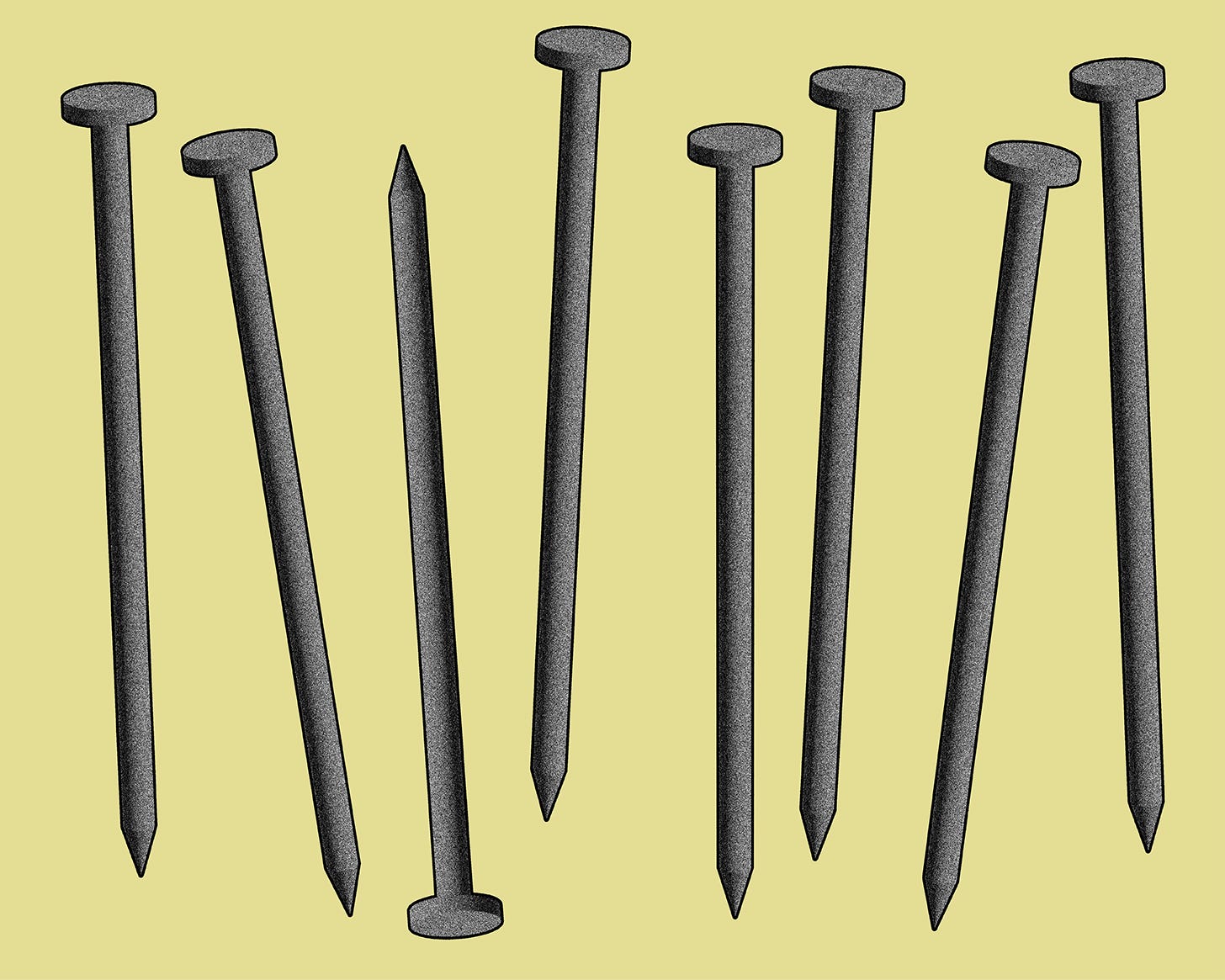
There might be grounds to file harassment against Grade, but his lack of a filter somehow makes him lovable. He gets away with it because he doesn’t take anything seriously and that’s who he is. When a roofer with six nails gunned into his skull is stretchered into the ER, Grade refers to him as “Pinhead. Like from the movie,” and he says it loud enough for everyone to hear. While so many of us search for meaning, I mean really strive for it, Grade has found his joie de vivre by merely brushing the surface of life. He never delves any deeper. How lovely it would be to think less, act more.
“I hear you pissed off that legless dude,” he says.
“Shut up,” I say.
“The guy from the protest? You know they had to amputate?”
“Shit,” I say. But of course there was no way to fix something so broken.
“He’s saying you told him that he’d walk again,” says Grade. “And now he’s threatening to sue.”
“What the fuck?” I say. “I didn’t say shit!” I make myself remember the interaction, the bruised and already atrophied limbs that were demolished beyond rebuilding. “I wouldn’t say that,” I tell Grade. “Why would I say that?”
“And he said you were teaching him Bible verses and shit. He said you were trying to evangelize him.” Grade says, “Nobody likes that shit.”
“I didn’t,” I say, but the cushioning of my shoes has already worn down and I slump, slow and tired as I make my way to triage.
There’s a stab wound victim, a couple seizures, and about a hundred cases of fever and lightheadedness and coughing, loss of taste and/or smell. There are false cases, as always, and the ones so serious it makes you want to cry. A homeless man I’ve passed on my way to work 100 times is finally admitted with heatstroke and when I take off his shoes, he shouts and blubbers because his foot is infected, dead, and turned completely black. I call Maylene, my superhero, to help and she arrives all coos and smiles while we peel the clothes off the man. She sponges him with me, careful to acknowledge what is filth and what’s a scab. He’s covered in scabs, bruises, a barely living, barely breathing wound. The man rattles with each inhale and, religious or not, it’s a miracle he’s made it this far. He should be dead. He should’ve died weeks ago, months. Amazing how some of us live in the most comfortable of conditions and can still complain about the damage we suffer while this outcast gathers cans on the street, malnourished and tetanused and moments from imminent death.
Miracles don’t have to be God, I argue with myself. Miracles can just be impossible odds.
Once he’s cleaned up, gowned, and bedded down, the issue arises of how he’s going to pay for his treatment. In my mind, I tally up all that he needs: days of bedrest, a bevy of shots, and his rotten feet will have to be removed. Then there’s the aftercare. He’ll need a wheelchair and a live-in nurse or a nursing home. He’ll need constant care for months. And I haven’t even gotten to the mental health side of things, the counseling and rehab and job coaching, etcetera. He’s, to put it bluntly, ultimately fucked for this world. And though I call Maylene my superhero, though I look up to her with the utmost respect for her brilliance in treatment and her soft touch and her gentle bedside care, I want to scream at her when she tells me we have to move this homeless man out. “He has to go,” Maylene says. “There’s just nothing we can do. Do you want to call social services? Or me?”
I step into the homeless man’s room for a final look, an apologetic glance. He’s been aphonic since admission, but he stares me dead in the eyes and crosses himself. I shut the curtain. I leave.
***
So the homeless man is moved to a shelter for a while and the lawsuit about the protestor’s legs is never filed, and I see the homeless man, now in a wheelchair, back out on the corner with a sign that reads, “repent,” which I’m not sure what he’s getting at with that word, “repent,” as if apologizing for your wrongs will do any good in this world. I catch a green light to pass him by which now smells like flatulent dude with an evergreen twist, and I stagger through the front door of my house, the one I share with my brother, that I’ve allowed my brother to share with me while he recovers, and I wonder what I even have to repent for, because though I feel like I’m doing everything wrong as of late, I’m really fucking trying to do right.
Abe is in the kitchen which is where we usually fight. He eats cold Stouffer’s lasagna from the pan with a spoon I assume he’ll never clean. He won’t wash anything, just toss it in the sink until the sink fills and then he’ll move the sinkful to the dishwasher and, if we’re both lucky, he’ll run it. I’m all fought out but dishes are what we usually fight about.
“Mags,” he says, “You look like…bad.”
This is a new self-imposed rule Abe’s made for his recovery: He doesn’t cuss. Swears are the patois of addicts, he says, of the druggies he once identified with, so the more distance he puts between himself and them, the better. I look at him like fuck. I look at him like goddamn, really?
“Save me some?” I say.
Abe stuffs a chunk into his mouth and gnaws. “How’s work?”
“What do you think about miracles?” I say.
He forks another mouthful. “Mmmarfumbl?” He speaks through his masticated food. Chews. Swallows.
“I mean,” I say, “Do they even happen? Do they like, really, happen?”
Abe swallows again, unashamedly licks his teeth. “You know just cause I found my higher power, doesn’t mean it has to be like capital G God, right?”
I nod.
“It’s my intellect,” he says.
I try not to snort.
He says, “It’s my purpose, you know. It’s me. That’s my higher power.”
“And miracles?”
“No. It’s only privileged people who get miracles. The rest of us pay for our actions.”
I’ve set Abe off, all the blather he’s bound together from rehab about being the author of your own actions and taking ownership of them and apologizing for them. While our parents believed redemption was a dead dude on a cross, Abe’s mentors have drilled him on personal responsibility. Abe took those pills. Abe wrecked that car. Abe shoved his ex down the steps. Just a few steps. Just halfway down to the landing. “So, yeah,” Abe says. “You can’t really have miracles when we’re all setting ourselves up for a specific destiny.”
I tell Abe about the snake handlers, about the Jericho wall tumblers, but Abe just shakes his head: “They’re lucky,” he says. “But if they hadn’t put themselves in those situations…”
Level-headed Abe. This coming from the dude who convinced me that aliens had been the ones who torched our back yard when it was really just mom burning dad’s baseball cards and bobbleheads. This coming from the dude who made us hide in the basement with tinfoil helmets when mom left and dad was gone every night at prayer groups and we were all alone.
“It would be nice though,” I say, “Wouldn’t it?
“Miracles?” he asks. “Yeah. That would be the shiz.”
***
Do I get to catch up on sleep? No. Do I get a quiet shift to calm my mind? No. I wake up to my alarm. I’m on the couch and Abe has apparently tucked me in. Not tucked me in but cocooned me so tight in a blanket that when I try to untangle myself, I fall against the old ottoman and bruise my arm on the exposed wood. Now I’m at the desk in triage, but Grade isn’t here. Fired, I’m told. Caught with his fingers in the RX bottle of Louise’s drugs.
“Louise has drugs?” I ask, this turn of events more shocking than Grade’s corruption. Yes, I’m told. Louise ordered drugs, opioids. My superhero talked her into it. Maylene just waltzed in the room and convinced Louise and Jakey to try the transdermal Fentanyl patch which was funny in the coincidence way of being funny because Fentanyl had been what caused Jakey’s overdose, the drug which left him desperate enough to be carted off to rehab. And the story was that when Maylene prescribed the drugs, Grade took it upon himself to deliver them, but, by the time he reached the room, Louise had changed her mind and Grade was already stumbling high with a patch on his own arm. Within a half hour, an orderly found Grade blasted out of his mind, retching into Louise’s toilet while a stalwartly sober, still stoic and strange, Jakey held back his hair.
“People change,” I say, considering Jakey, his heroism, his commitment to sobriety.
“No they don’t,” says the replacement nurse. “Grade’s done this shit like a thousand times before. Just got caught, is all.”
***
Grade is fired, and, by the end of my shift, Louise is murdered, a dozen fentanyl patches slapped to her skin and Jakey nowhere to be found. His phone was left on the visitor’s chair. No one had seen him slip out the front door. Maylene is the one who breaks the news to me since I’ve spent my entire day checking BPs and cleaning wounds. She offers to pray with me. She says, “I know you were close. I know it’s hard to be objective.”
She says “objective” like my lack of neutrality is moral failure, but was Jesus fucking impartial? Did your Jesus treat the disease, not the person?
You’re not Jesus, I remind myself. Not that I need reminding. Nothing stoic and miraculous about what I do, nothing holy about refusing a man dying of respiratory failure the hydroxychloroquine and UV treatment that his uneducated rulers command. Have you watched someone turn down a Zoom call with their family because they are convinced they aren’t actually dying? And that nurse that stands by, choking on her heart as she tries to explain to them that this is, in fact, the actual end, that they’ve fought the miracle-makers for death. Imagine that the lepers refuse Jesus’ laying on of hands because they don’t believe in leprosy and you have my position on miracles. It’s complicated. It’s all so fucking impossible. I’m not Jesus. Nothing like him. I administer the care I can while my patients fight me and hurt me and also fill me full of love, despair, hope, and tears.
It’s a miracle Grade’s gone.
It’s a miracle Louise died painlessly.
It’s a miracle Jakey got away because he wasn’t really smart enough to kill his mom and escape.
It’s a miracle Abe is still sober, still living with me.
It’s a miracle, after all he’s done and all I’ve blamed him for, that we even still talk.
And it’ll be a miracle if I make it home the next morning without a sob, but when Abe greets me at the door, I’m gonna cry the ugliest tears and I’m gonna smear his shoulder with slobber.
STORY:
Nick Rees Gardner is a teacher, critic, wine and beer monger, and author of the linked story collection, Delinquents And Other Escape Attempts (Madrona 2024). His short fiction and poetry has been published widely, as has his criticism on independently published literature. He owns a boutique wine and beer store outside of Washington, DC, but his fiction is often about his hometown in Ohio.
*
ART:
Matthew Austin is an artist & designer from Maryland, he can be reached at www.matthewaustin.net.

Next Tuesday, we’ll feature a bonus interview with Nick about this story.
Very well written. Touches on so many things: COVID, addiction recovery, faith, family, coping. The first person narrator could be any of us.
Wow wow wow.