A Conversation Between SSL Authors Chloe N. Clark and Anna Vangala Jones
A couple quick notes:
As mentioned last week, we’re taking June and July “off” from our regular publishing of a biweekly short story. During that break, we will be featuring various bonus material… including today’s interview between two Short Story, Long authors!
Read Chloe’s and Anna’s stories we’ve previously published:
The Rushing Waves, by Chloe Clark

David’s father had worked on submarines, far under the weight of the water, but he had always said that even in the deep there was light. Not light in the sense of actual light, but light in the way that he knew how water was filled with so much that was living. David thought that the same could not be said of space. The only thing in the Out seemed to be the absence of life, of light. He’d wanted so much to find beauty in that.
“A Love Story Told in Nine Lives” by Anna Vangala Jones

1.
This is the one in which they meet, fall in love, and get married. They will grow old together.
He takes her to a trendy new museum exhibit on their first date. He doesn’t do it to impress her but hopes that will be the result anyway.
The Legend of the Convenience Store Cashier by Anna Vangala Jones

We would all gather in the convenience store parking lot some Friday nights and watch the cashier leave. His shift ended at 8pm and he’d make his way out the door around 8:10 or so—head down, eyes on his sneakers that might have once been white long ago, one hand scrounging through the deep pockets of his baggy frayed jeans for car keys.
Thanks!
—Aaron Burch
Editor, Short Story, Long
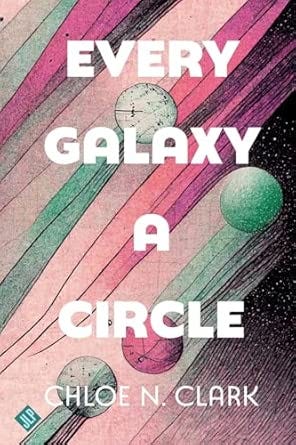
Conversation Between Chloe N. Clark and Anna Vangala Jones About Every Galaxy a Circle
Chloe N. Clark’s Every Galaxy A Circle is a heartfelt and wondrous journey that takes us to space and the depths of the ocean while exploring the human mind through memory, ghosts, speculative leaps in technology, and dreams. Her writing crosses the boundaries of genre in a way that feels completely natural and necessary to each of the beautiful stories in this collection. I got the chance to have an illuminating conversation with her about her process and approach to her characters and their relationships to each other as well as to the vast unknown. I hope you will enjoy reading her book as much as I did. — AVJ
Anna Vangala Jones: As someone who never tires of exploring the themes of memory and loss and the role of technology in how we navigate these givens of being alive in my own fiction, I was excited to read your collection, especially the stories touching upon those questions. I love reading stories, poems, and books and watching TV shows and movies that try to grapple with this enduring subject of retaining or removing beautiful memories turned painful after separation or death. What struck me about your stories like “All of Your Others” and “Bring Out Your Dead, We’ve Been Waiting to Talk to Them” is how they still managed to be so original, fresh, lovely, heartbreaking, and human. How do you go about balancing the inventive and speculative with characters and relationships that feel real, singular, and meaningful?
Chloe N. Clark: First, I also love when art integrates memory and its place in our lives. I think, in a lot of ways, memory is where we spend most of our lives so it’s a deeply important subject as well. For me, I always start with an image when I write and I think that forms a bedrock for characters and relationships. Why is this image important? What does it say about the people in it or thinking of it? I’ve been called “high concept” by a few people and I really take that as a compliment--I like creating imagined tech and futures. But I also think that for me high concept also refers to characters. I need to have something that the concept is grounded in or it doesn’t feel tangible. And, for me, that balance really comes down to trying to understand my characters as deeply as I can. Why does this tech or speculative element mean something to them? I think asking that question early in my process of writing is really important to me.
AVJ: Can we talk more about your writing process? I love this idea of the characters being as important to the development of the story idea as the imagined tech and futures. Are there any exercises outside of what makes it to the page that help you get to know and understand your characters more deeply or intimately? Or do you discover them through the telling of their stories?
CNC: I don’t necessarily do exercises, though there will be a lot of extra writing that doesn’t make it into the final story. I like writing flashbacks or dreams for characters and often those either won’t make it in full to the story or will be cut completely. In addition, there are a few key things I like to always know about a character going into the story. The first is: what do they do for their livelihood? We spend so much of our time bound to jobs that I think that’s an important element of a character. The second is: who do they love? If I know the people and animals that make up a character’s soul then I think I have a good grasp of who they are on a fundamental level.
AVJ: I agree that the speculative and fantasy elements in your stories teach us something about your specific characters but I think they also speak to the world we live in now. Do you set out for your fiction to impart some kind of wisdom or statement on current events and the ongoing human condition or are they more meant to raise meaningful questions for the reader to explore?
CNC: Oof, I feel like this is a hard question to answer in a meaningful way. I don’t think I set out to make a statement about current events, but I also find it hard not to make a statement. In that, so much of our lives are absolutely subsumed by all of the noise of the world—for example, if I’m horrified by technology that promises to “end grief” then, of course, it’s going to filter into my imagination. Do I think all art needs to have a message? Probably not. Do I think all good work does make a statement or make a reader (viewer/player/listener) think about the world in some way? Absolutely, yes.
AVJ: I enjoy the unique blend of nostalgia and looking forward in your stories—do ghosts and dreams act as a way in to illuminate the reality of the present?
CNC: I do think nostalgia can illuminate the present. It can also illuminate what we want to avoid thinking about as well. The things we’re nostalgic about are often so rose-colored in our eyes because we’re not thinking about the issues that were happening around them. Any point in history that you look back on fondly had something horrific happening. Conversely, forward-looking is equally important because that’s where we find warnings and what not to do’s and it’s also where we find hope. Our realities are all just dreams and ghosts, and how they measure out for us ends up determining where we take our next steps.
AVJ: Like you said, anything promising to “end grief” is disturbing—grief is inherent to being alive and loving and losing and all of it. So much of your writing captures this beautifully like the story “Stone Fruit”; that image of Shelley waiting in the diner will stay with me. Do you think there is a part of Shelley that hopes her sister won’t walk through the door because her absence keeps some hope alive? How would the dead being able to visit alter grief or the concept of missing someone if they’re never really gone?
CNC: Oh, absolutely, I think there is a part of Shelley hoping that. I think if the dead were able to visit, it would ultimately reshape the ways we grieve. A visit isn’t a life together, so there’s still an absence but I think it also allows you to stay stagnant within your grief too. It’s a suspension without the chance of healing. I do think there is a big distinction though between if it was the actual dead/ a ghost visiting someone and a tech version of that!
AVJ: Oh yes, an enormous difference. I meant you captured the immense intensity of grief so well and how it gets complicated by these moments with the dead that are still a form of absence. Could you talk a bit more about this idea of it being “a suspension without healing”? I love how you put that.
CNC: I think that any time we aren’t facing the truth of something, it holds us in a kind of stasis. Obviously, every experience of grief is different, but I do think there’s importance in approaching things.
AVJ: There is such a dreamlike quality to stories like “The Rushing Waves” that travel deep into the ocean and the many stories that take us to space. What is it that draws you to the vast unknown of these places in your fiction?
CNC: On a purely selfish writer level, I love space and the ocean. Even as a child, I found myself deeply entranced by imagery of those two things. I think the idea of something being unexplored is so deeply hopeful? Like we have this chance to discover so much more and, even beyond discovery, it’s nice to think that there are things we can’t possibly know. And it’s also, conversely, terrifying because of what might be out there. I want my stories about space or the ocean to hold those two feelings at the same time.
AVJ: The stories in this collection refuse to fit neatly into just one box according to genre or theme but they all complement and challenge each other in wonderful ways. What do you see as being the threads that tie these tales together?
CNC: I’m very careful with how I construct collections, so one of the first things I consider is some kind of thematic thread that holds pieces together. In this collection, memory and community were essential ideas. What do our memories give us and what do they keep us from? How do the people around us shape how we act and who we become?
AVJ: We talked about your writing process as it relates to generating these ideas, images, and characters and the questions you want raised or answered by a story, but I’m curious now how you go about crafting the endings of these beautiful meditations on memory and community. How do you envision endings of short stories functioning maybe versus in a longer work and how do you know when you’ve landed on the right closing moment or image or question to leave the reader pondering?
CNC: I wish I had a thoughtful answer to this! In honesty, I am very much a “I know the ending when I see it” writer. For me, endings rely on some kind of change (whether that’s for the character or for the reader). I have definitely written stories past where they should have ended because I thought they needed some more closure—and every single time, I’ve erased that extra bit of ending in edits because it feels like it doesn’t need to exist. To paraphrase Gandalf “An ending is never late, nor is it early, it arrives precisely when it means to.”
AVJ: You said that you are very careful and intentional when building a collection and I think that very much comes across to the reader in Every Galaxy a Circle. Could you speak to the order of the stories and how you arrived at this particular set and how they’re presented?
CNC: So, all three of my collections were written over the same period of years (give or take a year or two). In each one, I thought about the themes that were meaningful to the collection and the “cinematic arc” of the collection (what emotional beats are being hit, where does this collection need to rise and fall, etc). Then I’d select stories from the ones I’d written that fit this. For Every Galaxy a Circle, I think I had about 40 stories to start that I was considering and then really spent time narrowing that down to the ones that ended up in the collection. Once I had the stories, then I worked on ordering them. This is really just me rereading and rereading and rereading to find where they connected. It’s like a puzzle where I know what it should eventually look like and it’s a question of fitting in the pieces right. There should be a sense, when reading the collection from start to finish, of momentum and of continuation (repeated images, things that seem to be recalling a memory of another story, etc).
Now, originally, there was one more story in the collection. However, my amazing editor, Juan Martinez, thought the ending was stronger without it. And he was completely right. The story served as an epilogue of sorts and I think the collection now ends where it actually needs to.
AVJ: Thanks so much for this conversation. Is there anything I didn’t ask here that you’d love for readers to know about this collection or you as a writer?
CNC: There is a secret recipe for every one of the stories in this book and if I ever have time I will write these up and post them somewhere.
Anna Vangala Jones is the author of the short story collection Turmeric & Sugar (Thirty West, 2021). Her writing has appeared in Wigleaf, Short Story Long, Craft Literary, Berkeley Fiction Review, Rejection Letters, Terrazzo, XRAY, and The Bulb Region, among others. Her stories have been selected for Longform Fiction’s Best of 2018, the Wigleaf Top 50 longlist, and nominated for the Pushcart Prize and other award anthologies. Find her online at annavangalajones.com.
Chloe N. Clark is the author of Collective Gravities, Escaping the Body, and more. Her most recent book is Every Galaxy a Circle.